Tell us where the
brand is now.
Three short steps, about ninety seconds. We read every one of these ourselves. It goes to the MediaX team in Bengaluru, not a shared inbox somewhere.
Skip the form.
Just call us.
Email or ring the studio directly, same team, same one-business-day reply.
We reply within one business day, with either a scoping call slot or an honest note that we're not the right fit.
Four steps, and
none of them are
a chase call.
We'd rather lose a fit quickly than manage one badly. Here's the sequence, so nothing about it is a surprise.

Either a scoping call slot, or an honest note that we're not the right fit for this one, with a reason.
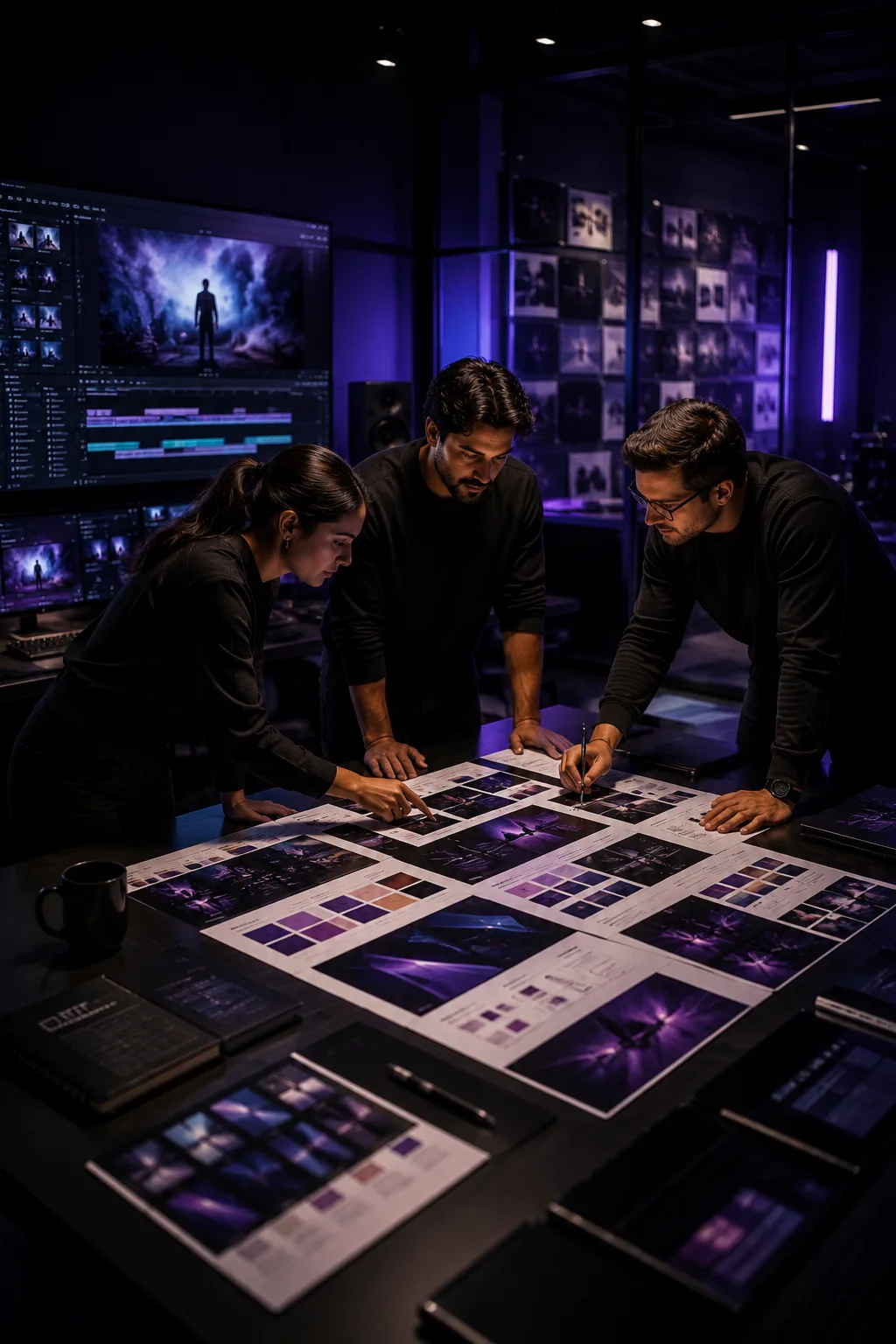
Where the brand is, what you already have, who reviews and signs off, and what the deadline actually is. We'll screen work from your category.

Fixed foundation scope, monthly engine scope, the deliverable list attached to each, and the commercials, so you're comparing something real.
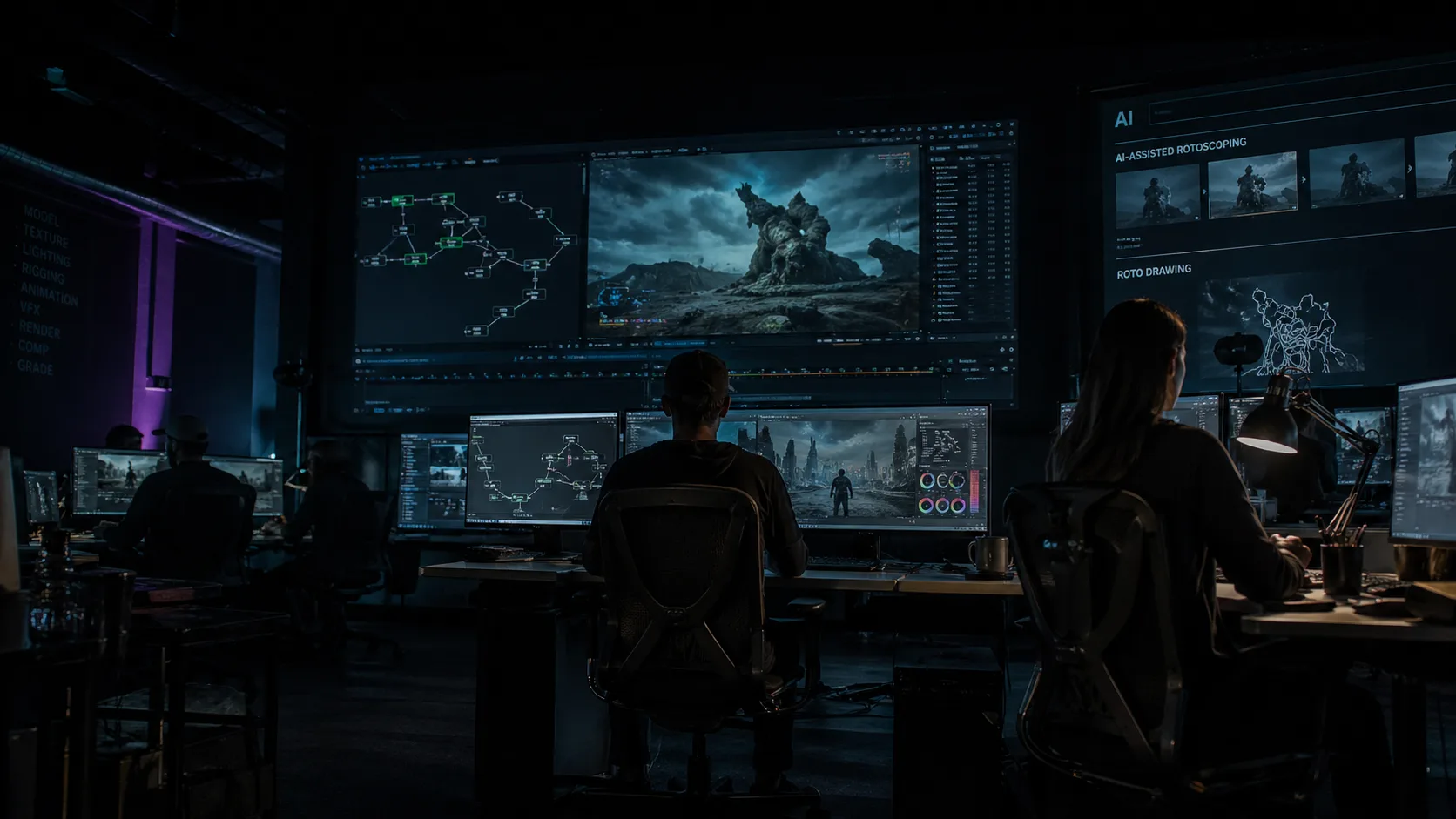
Discovery, strategy, identity, website and the Blue Book. After that, the always-on engine starts and the monthly report cycle begins.
Procurement questionnaire, security review or vendor onboarding form? Send it with the brief, we'd rather answer it up front than at signature.
Straight answers.
For the right kind of film, yes, and we'll tell you when it isn't. Generative models still produce short clips, so a film is assembled from many controlled generations rather than shot in long takes. That works beautifully for concept films, product films, biopics and anything where the subject doesn't physically exist yet. It works less well for unscripted human performance and complex crowd work, where we'd recommend a hybrid shoot. The honest answer is that reliability comes from the pipeline discipline (locked keyframes, reference sets and a director judging every take), not from the model.
Usually it replaces the coordination overhead, not the people. Most clients come to us running three to five vendors (a design studio, a social agency, an SEO consultant, a production house, a web developer) and spending more time aligning them than reviewing the work. BSIM consolidates the framework and the governance. Your in-house team keeps ownership of the brand and gains a Blue Book that makes their job enforceable. If you have a strong internal creative team, we're happy to run as the system and studio underneath them.
Two principles. First, no hidden AI: you always know exactly which shots were generated and which were captured, in writing, before delivery. Whether and how you disclose that publicly is your call, but you make it with full information. Second, no synthetic humans without consent: we don't generate the likeness or voice of a real person without documented permission from that person. Audiences have got noticeably sharper at spotting work with no craft behind it, and the brands that got burned in the last two years were the ones that treated AI as the pitch rather than the pipeline.
You own the deliverables, and we assign rights to you on delivery. On the input side we prioritise models and music sources that are commercially cleared, and we document the provenance of what was generated so your legal team gets a straight answer rather than a shrug. Where a project has strict IP requirements (a listed company, a regulated sector, anything heading into paid media at scale), we'll scope it to indemnified and licensed-training-data tools specifically, and say so in the proposal.
Your material is used for your project and nothing else. It isn't fed into general model training. Access is role-limited, assets live in project-scoped storage, and unreleased material is handled under NDA as standard. Mindlogicx runs group-level compliance and data-ethics policy across regulated sectors including health and finance, and MediaX operates inside it. If your procurement team has a specific security questionnaire, send it over. We'd rather answer it up front.
It depends on the tier, the number of markets and languages, and how much of the work your internal team is already doing. We don't publish figures because a number without a scope behind it is misleading in both directions. What we do instead: a scoping call, then a written proposal with a fixed foundation scope, a monthly engine scope, and the deliverable list attached to each, so you're comparing something real. Most conversations get to a number within a week of the first call.
Much faster than a traditional shoot, and we'd rather give you a range than a headline. The generative pipeline removes casting, scouting, crew scheduling, travel and shoot days, which is where most of the calendar goes. What it doesn't remove is strategy, scripting, boarding, direction, revision cycles and finishing. In practice, timelines compress from months to weeks; the exact number depends on how many stakeholders review, and how many shots need a locked character or product. We commit to a date in the proposal, per film.
Yes. Plenty of engagements start with a single film, usually a launch film or a founder film with a real deadline attached. It's a reasonable way to see how we work before signing up to a 24-month framework. We'll flag the one risk honestly: a film made without a settled position tends to be a beautiful asset that says something slightly different from everything else you publish. If you already have clear positioning documented, that risk is small.
Access and decisions. Access means a few hours of senior time in the discovery phase, and someone who can answer questions about the business rather than just the marketing. Decisions means a single named approver. The thing that slows brand programmes down is never the work, it's a review cycle with no owner. After the foundation phase, the ongoing ask is roughly two hours a month: one review, one sign-off.
 Selected workSee the work first
Three case studies with the brief, the approach and the reasoning behind each.
See the work ↗ Engagement modelsWork out the likely tier
Two components, three tiers. Read the scope before the call and the call gets shorter.
Compare the tiers ↗ The filmsWatch something we made
A long-form biopic, a product library and a social cut, all playable in the browser.
Watch the films ↗