
Can AI Replace Digital Marketers? The Truth
Table of Contents
Artificial Intelligence did not enter digital marketing with disruption as its stated goal. It arrived quietly first through recommendation engines, then automation tools, then optimisation systems that promised efficiency. Over time, it moved closer to the core of marketing itself: planning, targeting, content creation, and decision-making. Somewhere along this progression, a practical shift turned into an uncomfortable industry-wide question: Can AI replace digital marketers?
This question is rarely about technology alone. It reflects a deeper uncertainty about what digital marketing truly is and where real value lies when machines become faster, cheaper, and more capable.
For years, digital marketing drifted toward being platform-centric and execution-heavy. Success was often measured in activity rather than understanding: the number of campaigns launched, dashboards monitored, reports generated. As long as tools were complex and execution was slow, effort could masquerade as expertise. In that environment, the rise of AI was bound to feel threatening.
AI did not create this vulnerability. It revealed it.
At its foundation, marketing has never been about tools. It exists to connect a business with real human demand. That connection requires understanding intent, context, trust, timing, and psychological dimensions that cannot be reduced to datasets alone. Technology can accelerate marketing, remove friction, and scale execution, but it cannot define purpose. AI changes how work gets done, not why the work exists.
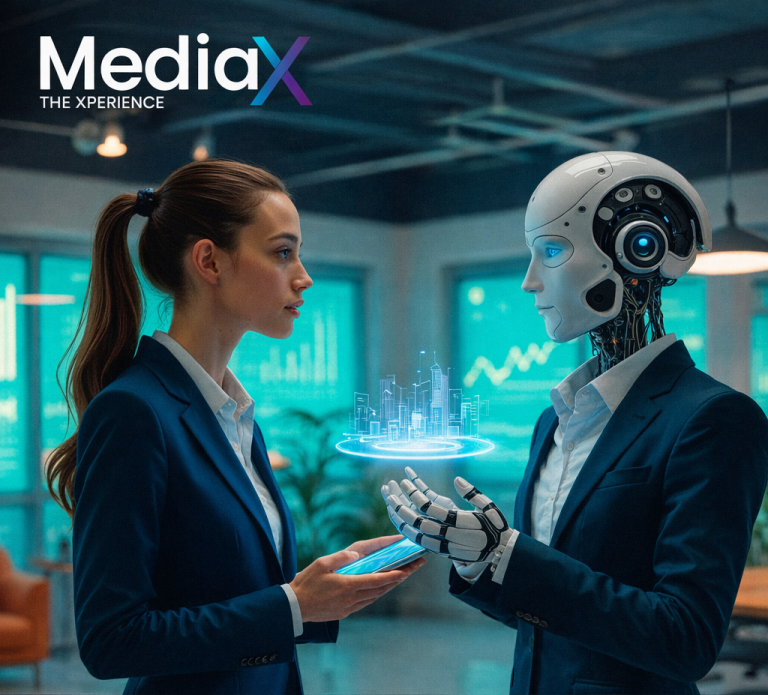
What AI Is Really Changing And What It Isn’t
What AI has genuinely transformed is execution. Tasks that once required teams and time now happen almost instantly. Data that once demanded interpretation is processed automatically. Campaigns that once needed constant manual optimisation now self-adjust in real time. This creates the illusion that AI is “doing marketing.”
In reality, AI is performing what marketing quietly allowed itself to become: a series of mechanical actions detached from deeper thinking.
This distinction matters because AI does not understand judgment. It does not know why a brand should exist, which trade-offs matter in the long term, or when restraint is more valuable than growth. AI optimises relentlessly for the objective it is given even if that objective is flawed. If the strategy is weak, AI will scale the weakness faster. If the positioning is unclear, AI will optimize confusion efficiently and at scale.
This explains a reality many overlook: organisations using the same AI tools experience radically different outcomes. The difference is not the technology. It is the clarity of thinking behind it.
Another shift that often goes unnoticed is how AI redistributes responsibility. As execution becomes automated, the marketer’s role moves upward. Decisions become heavier. Outcomes become more directly tied to judgment rather than effort. There are fewer places to hide. Activity no longer signals value; clarity does.
This is uncomfortable because it removes long-standing illusions. When tools were difficult, effort felt like expertise. When execution was slow, motion felt like progress. AI removes those buffers. It forces digital marketing back to first principles: Who is the customer? What problem are we solving? Why should this brand matter? What does success look like beyond short-term metrics?
It also exposes a quiet but important truth. AI does not reduce the need for marketers, it raises the standard for being one. When execution is easy, the differentiator is no longer how much work gets done, but how well decisions are made. Poor judgment scales just as efficiently as good judgment. In fact, it scales faster.
This is why some teams experience AI as a performance multiplier, while others see diminishing returns. AI does not compensate for shallow thinking. It magnifies whatever thinking is already present.
Why This Shift Matters More Than Most Marketers Realise
The strongest digital marketers today are not those who use AI most aggressively. They are the ones who use it deliberately. They understand where AI excels speed, scale, and pattern recognition and where it fails context, nuance, and long-term consequence. They treat AI as an engine, not a compass.
This also explains why fear around AI is uneven across the industry. Marketers whose value was tied primarily to operating platforms or following processes feel threatened. Marketers who built their value on understanding human behaviour, designing systems, and aligning marketing with business outcomes feel reinforced. AI does not flatten expertise; it sharpens the distinction between surface-level skill and real competence.
What often gets missed in public conversations is that AI is not replacing digital marketers, it is replacing a shallow version of digital marketing that relied too heavily on tools and too lightly on understanding. It is quietly removing low-leverage work and raising expectations for what effective marketing looks like.
Digital marketing is not disappearing. It is maturing. The industry is moving from execution to ownership, from activity to intent, from optimisation to judgment. AI accelerates this shift, but it does not define it.
What This Ultimately Means for Digital Marketers
The most important takeaway from this shift is not about learning new tools, but about reclaiming the real work of marketing. AI makes it impossible to hide behind complexity. It forces clarity about customers, strategy, and outcomes.
Digital marketers who invest in judgment, systems thinking, and strategic depth will find AI to be a powerful amplifier of their value. Those who rely primarily on execution will find that value increasingly difficult to defend.
This is not a crisis for marketing. It is a correction.
Conclusion
The question of whether AI can replace digital marketers misses the deeper shift taking place. AI is not eliminating marketing, it is eliminating the comfort of operating without clarity.
As execution becomes faster and cheaper, thinking becomes more valuable. As automation scales, judgment matters more. AI forces digital marketing to return to its fundamentals: understanding people, making deliberate choices, and owning outcomes rather than activities.
Those who built their roles around tools will feel pressure. Those who built their value around insight will find leverage. This is not a threat to marketing; it is a refinement of it.
AI will continue to evolve, and its capabilities will grow. But it will remain what it is: a powerful engine for optimisation, not a source of meaning or direction. That responsibility will always belong to humans.
Digital marketers are not being replaced. They are being asked to grow up with sharper thinking, clearer judgment, and greater accountability.
That is not the end of marketing.
It is the beginning of a more disciplined, intentional one.
FAQs
1. Which digital marketing roles are most affected by AI?
Roles focused mainly on manual execution such as campaign optimisation, routine reporting, and basic content generation are most affected. As these tasks become automated, roles centered on strategy, customer insight, and outcome ownership are becoming more valuable.
2. Why do companies using the same AI tools get very different results?
Because AI does not fix weak strategies. It only optimises within the boundaries it is given. Companies with clear positioning, strong customer understanding, and well-defined goals see AI as a multiplier. Companies without clarity experience faster failure or diminishing returns.
3. Is learning AI tools enough to stay relevant as a digital marketer?
No. Tool knowledge alone is no longer a differentiator. What matters is the ability to apply AI thoughtfully knowing when to use it, when to question it, and how to interpret its outputs. Strategic thinking and judgment remain the core value of a marketer.
4. Does AI make marketing less human?
Only if it is used without human oversight. AI itself is neutral. When guided by clear strategy and intent, it can actually free marketers from mechanical work and allow more focus on creativity, storytelling, and meaningful customer relationships.
5. Can AI completely replace digital marketers?
No. AI can replace repetitive, execution-heavy tasks, but it cannot replace strategic thinking, judgement, or accountability. Marketing involves understanding people, business priorities, and long-term brand impact areas where AI lacks context and intent. AI changes how marketing is executed, not why it exists.
6. What is the biggest misconception about AI in digital marketing?
The biggest misconception is that AI “does marketing.” In reality, AI executes instructions and optimises parameters. It does not define goals, values, or meaning. Those responsibilities remain human and always will.