
How AI Is Transforming Animation, Motion Graphics & AR/VR Experiences
Table of Contents
The landscape of media production is evolving at an unprecedented pace. AI-powered media production studios are redefining how animation, motion graphics, and immersive AR/VR experiences are created, enabling faster timelines, higher quality, and scalable outputs. From 2D/3D animation studios to digital content production agencies, creative production services are leveraging AI to enhance every step of the workflow.
AI-Powered Animation and Motion Graphics
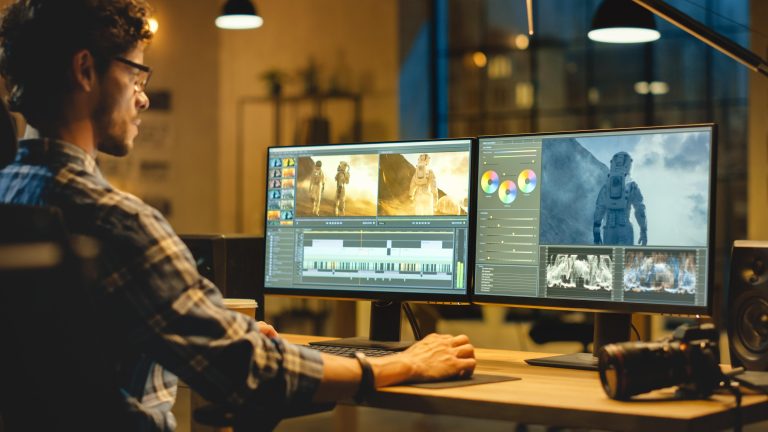
Generative AI has transformed the animation and motion graphics industry by automating time-intensive processes and enhancing creative possibilities. Modern AI-driven animation pipelines can generate 2D/3D characters, storyboard sequences, background environments, camera movements, and lighting simulations in a fraction of the traditional production time.
In character animation, AI tools apply motion prediction, pose estimation, and neural rigging, enabling animators to produce natural movement and expressions without manual keyframing. For 3D workflows, AI assists in procedural modeling, automatically creating complex textures, lighting variations, and physics-driven animations that previously required hours of expert labor.
When it comes to motion graphics, AI significantly speeds up tasks such as transitions, graphic layouts, text animations, infographic sequences, and stylistic variations. Creative teams can instantly repurpose content formats like turning a long-form video into short reels, explainer segments, or localized variations without rebuilding designs from scratch.
AI-enhanced explainer video production platforms now use:
Template automation to maintain brand consistency
Style-transfer models to adapt different visual identities
Smart editing to synchronize motion with voiceovers
AI narration and lip-sync tools for fast multi-language versions
Studios using AI integrated with on-screen digitization, automated quality checks, and metadata tagging can ensure uniform visual output across campaigns, even when producing hundreds of videos simultaneously. This is especially valuable for advertising agencies, EdTech platforms, product demo creators, and enterprise communication teams.
By combining generative AI, procedural animation, and real-time rendering, production houses can deliver high-volume, high-quality animation at lower costs, enabling brands to scale storytelling faster than ever before.
AR/VR and Immersive Experiences
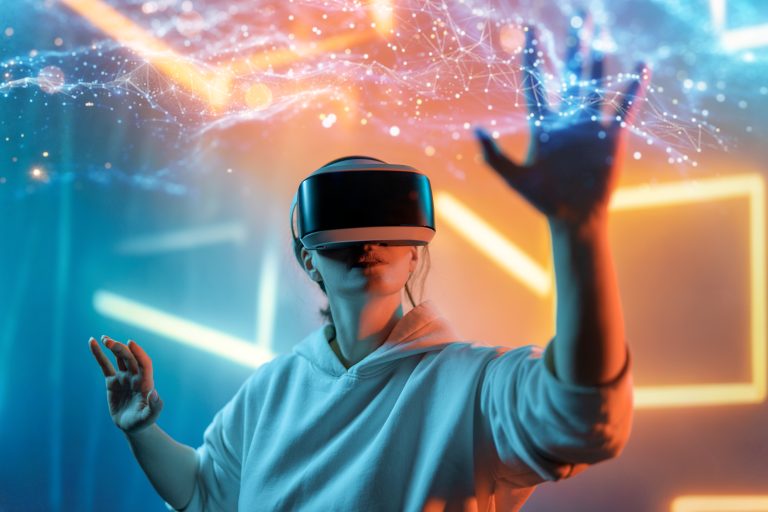
AI is transforming how AR, VR, and immersive environments are created, making advanced digital experiences more accessible than ever. Today’s immersive media production companies use AI to build hyper-realistic AR overlays, interactive VR worlds, and fully simulated environments with remarkable accuracy.
AI-powered virtual production pipelines allow studios to previsualize scenes, test lighting, simulate physics, and even design complex environments before real production begins. This drastically reduces cost, time, and resource requirements enabling even small agencies to produce experiences that once required Hollywood-level budgets.
Generative AI imagery studios now create photorealistic backgrounds, props, characters, and 3D landscapes in minutes. These assets can be instantly integrated into AR filters, VR walkthroughs, training simulations, gaming environments, and branded immersive activations.
For businesses and creative teams, this means faster prototyping, easier iteration, culturally adaptive visuals, and more engaging user experiences. AI-driven AR/VR production also improves accuracy in digital twins, enhances immersion for virtual events, and allows for highly personalized interactive journeys.
In short, AI is redefining immersive content creation making AR, VR, and extended reality experiences more scalable, more realistic, and more impactful across industries.
Why Studios Are Embracing AI
AI reduces production costs, accelerates timelines, and empowers creators to focus on high-level storytelling. Creative production services now benefit from scalable output, consistent quality, and the freedom to experiment with new visual styles. AI-powered studios, from motion graphics houses to AR/VR content creation services, are not replacing talent they are augmenting human creativity, enabling faster iterations and delivering content that engages audiences more effectively.
Conclusion
The integration of AI in animation, motion graphics, and immersive media production has transformed the creative landscape. Studios that adopt AI-powered solutions, including generative AI imagery, virtual production, and creative automation platforms, can achieve faster production cycles, maintain quality at scale, and deliver content that resonates with audiences worldwide. The future of media production lies in the seamless collaboration of AI and human creativity.
FAQs
1. How does AI improve animation workflows?
AI generates character models, motion sequences, and backgrounds, reducing manual labor while maintaining stylistic consistency.
2. Can AR/VR experiences be fully created using AI?
AI assists in environment design, physics simulation, and previsualization, speeding up production, but human creativity ensures narrative and design quality.
3. How does AI support multilingual content localization?
AI automates translation, dubbing, and subtitles, ensuring accessibility and cultural accuracy for global audiences.
4. Does AI replace creative professionals?
No. AI acts as an augmentation tool, handling repetitive and technical tasks while allowing creators to focus on storytelling and innovation.